What is ETFE? The Fluorine Polymer That's Proving Its Worth as a Long-Term Building Investment
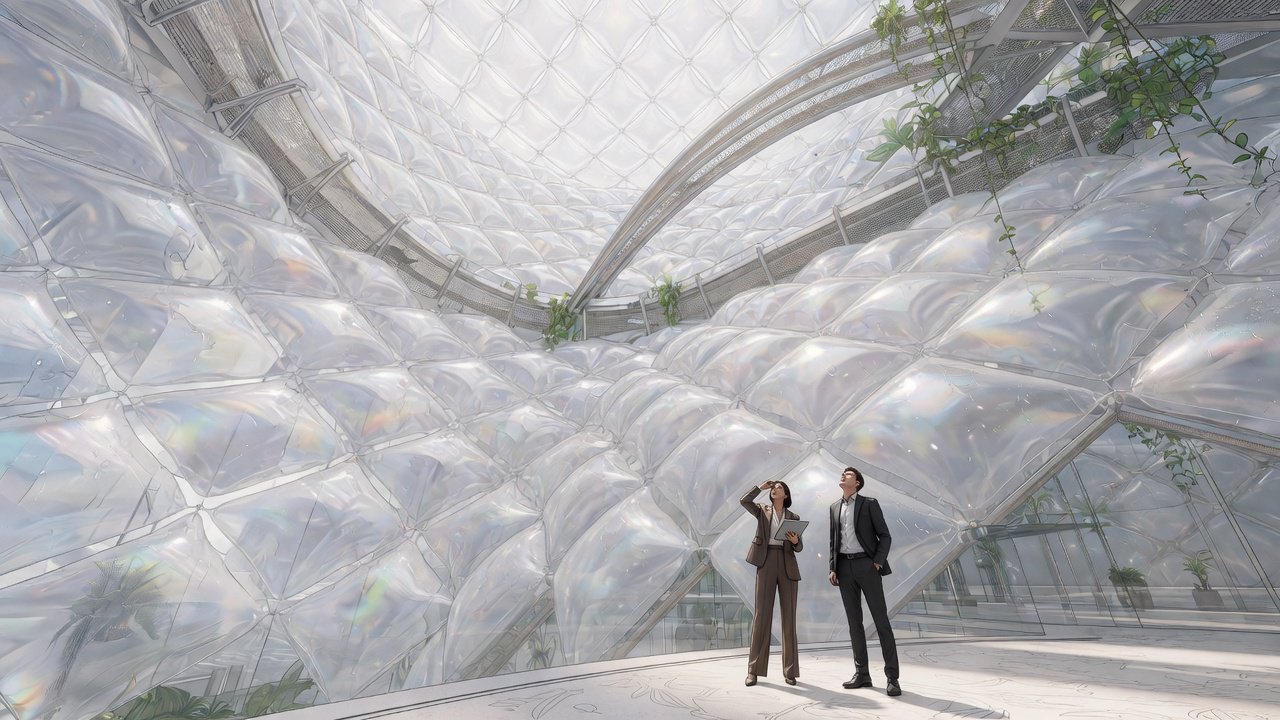
You know, when clients ask me about materials that actually hold up over decades instead of needing constant fixes, I sometimes bring up etfe. Ethylene tetrafluoroethylene sounds technical, sure, but it's basically this tough, transparent fluorine-based plastic polymer that's been quietly replacing glass in some of the most ambitious structures around. And the longer I look at the data, the more it reminds me of a solid ETF pick: you accept a bit more upfront, then watch the benefits compound for thirty, forty, fifty years.
The thing is, etfe didn't start in architecture at all. DuPont developed it back in the 1970s for aerospace coatings that needed to handle extreme heat and stay lightweight. By 1973 it was commercial, and now it's everywhere from giant greenhouses to stadium facades. Architects love it because it solves problems glass creates – weight, breakage, heavy support structures – without sacrificing light or durability.
The Standout Properties That Make ETFE Different
ETFE is a melt-processable fluoropolymer, a copolymer of ethylene and tetrafluoroethylene with the formula (C4H4F4)n. That chemistry gives it a rare mix of traits. It stays strong from -200°C all the way up to 150°C. Tensile strength is excellent, tear resistance is high, and it takes impacts far better than you'd expect from something so thin. It's ductile too – it bends and stretches (up to three times its length in some tests) instead of shattering.
Compared to PTFE, etfe is less flexible but way tougher on abrasion and cut-through. It transmits up to 95% of visible light – about 25% more than standard glass – and stays clear for decades because it's naturally UV resistant and almost nonstick. Rain basically washes it clean. It won't burn easily either; it melts then self-extinguishes with low smoke.
And here's something most people miss: etfe film is only about 1% the weight of glass for the same coverage. That single fact changes everything about how you design the supporting frame and foundations.
ETFE Versus Glass: The Numbers Tell the Real Story
Is etfe cheaper than glass? It depends how you count. The raw film or cushion system can cost more per square meter upfront – think $180–450 for typical multi-layer setups versus basic double glazing. But once you factor in the structure, transport, and long-term upkeep, etfe often wins by 24–70% on total installed cost. Lighter means smaller beams, less concrete, cheaper shipping. No broken panes to replace after storms. Minimal cleaning crews. And those air-filled cushions add real insulation, cutting heating and lighting bills year after year.
Glass is heavy, brittle, and expensive to support over big spans. ETFE just flexes. Hail, debris, even the occasional maintenance worker walking on it – it bounces back. I've seen project data where switching to etfe let teams shrink the steel skeleton dramatically. That's the kind of efficiency that shows up on the balance sheet for decades.
ETFE and PTFE: Not the Same Material at All
A lot of people ask about the difference between PTFE and etfe. PTFE is the classic Teflon stuff – super slippery, great for non-stick pans and flexible tubing. ETFE is stiffer and built for structure. You inflate etfe into those big pillow-like cushions that form roofs and walls. PTFE wouldn't hold the shape or take the tension the same way. So when an architect needs a transparent, load-bearing skin, etfe is the one they reach for.
Where You Actually See ETFE Doing Its Job
The Water Cube in Beijing used the world's largest single application of etfe – those bubbly panels that lit up during the Olympics. The Eden Project in England relies on etfe cushions for its geodesic domes. Stadiums like the Allianz Arena in Munich have etfe skins that change color with the teams. Greenhouses, atria, even some solar-integrated facades now use it. Anywhere you need massive transparent spans without the weight penalty, etfe shows up.
Recent projects are pushing it further – hybrid systems that combine etfe with photovoltaics or embed sensors for real-time monitoring. The market for etfe architectural membranes is growing fast, with solid double-digit growth projections through the early 2030s as more designers chase lighter, more efficient envelopes.
The Environmental Picture on ETFE
Is etfe eco-friendly? It's not perfect, but the full lifecycle looks better than most alternatives. The material is fully recyclable – old film can be melted and remade into new products. Lifespan routinely hits 30–50 years, so you're not tearing things down and rebuilding every decade. High light transmission and the insulating cushion effect reduce artificial lighting and heating loads, which matters for the building's operating carbon.
Production does involve fluorine chemistry, and embodied energy numbers vary in studies, but several life-cycle assessments show etfe systems coming out ahead of glass when you include transport and long-term performance. At the end of the day, fewer replacements and lower energy use in operation add up. It's not zero-impact, but it's one of the smarter choices when you're thinking thirty years out instead of five.
Does ETFE Actually Make Sense on Paper?
Look, I'm not saying every project should switch tomorrow. For small residential windows, glass still wins on cost and simplicity. But for anything with big spans, high light needs, or long design life – airports, stadiums, research facilities, large atria – the math favors etfe more often than not. Lower structural costs, near-zero maintenance, superior daylighting, and decades of service without major intervention. That's the definition of a patient, data-driven decision.
Just like I tell clients about building diversified portfolios: time in the market beats timing the market. The same principle applies here. ETFE isn't flashy speculation. It's a calculated material choice that rewards people willing to think long-term.
And honestly, that's why it keeps showing up in the best projects. It simply delivers more value the longer it stays in place.
